Tennis Racket Static Weight, Swingweight & Grip Sizes (G1–G4): OEM Assortment Guide
How B2B tennis brands plan 270g, 285g, and 300g unstrung weight tiers, balance and swingweight targets, and G1–G4 grip size ratios.
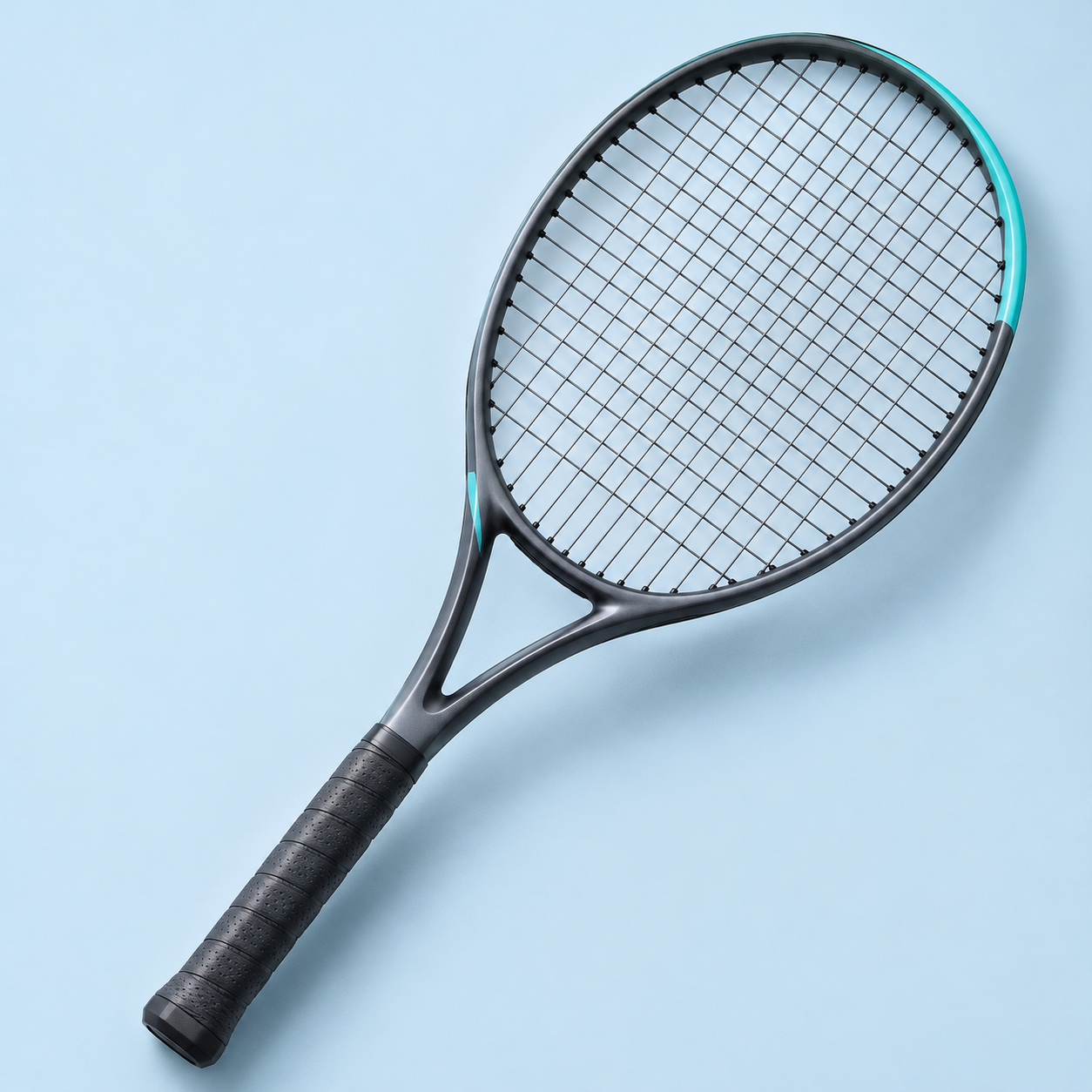
A commercial tennis racket range succeeds when static weight, dynamic swingweight, and handle sizing match the physical strength and regional preferences of your buyers—without fragmenting inventory across slow-moving SKUs.
01 / Structuring Adult Unstrung Weight Tiers
Rather than launching multiple unrelated molds, many brands build a cohesive family from one or two graphite tennis molds adjusted across three unstrung weight classes:
| Unstrung Class | Target Player Segment | Typical Balance Direction | Assortment Role |
|---|---|---|---|
| ~265 – 275 g (Lite) | Developing juniors, recreational & Transition players | Slightly head-balanced for easy pace | Entry & club comfort SKU |
| ~280 – 285 g (Team) | Intermediate club players & fast-swinging doubles | Near-even balance (~325 – 330 mm) | High-turn all-court volume SKU |
| ~295 – 305 g (Tour) | Advanced league & heavy-spin baseliners | Head-light (~315 – 320 mm unstrung) | Flagship performance halo SKU |
02 / Why Static Weight Alone Is Not Enough
Two 300 g unstrung frames can swing very differently depending on polar mass distribution and beam stiffness. When reviewing samples, check unstrung balance (in mm from the butt cap), dynamic swingweight on a diagnostic machine if required, and frame bending stiffness (RA) so rally stability matches your target audience.
03 / Planning G1–G4 Grip Sizes & Handle Construction
Tennis handles are formed using molded PU foam or modular pallet shells wrapped with replacement base grips:
- G1 (4 1/8") & G2 (4 1/4"): Dominant demand across Asian markets, youth academies, and lighter 270–285 g models; G2 is also the most versatile global retail size because players can build up thickness with an overgrip.
- G3 (4 3/8") & G4 (4 1/2"): Higher share in European and North American adult men's 300 g+ orders. Confirm exact octagon bevel dimensions on physical samples before finalizing size splits.
04 / Head Bumper Guards & OEM Spec Confirmation
Verify replacement bumper-guard fitment, grommet channel depth, and butt-cap & decal branding on approved samples, and include spare grommet strips in your after-sales plan where needed. Share your target markets on WhatsApp to discuss tennis mold options and grip size breakdowns.
Related engineering guides
Box vs. Aero Frame Profiles, Shaft Diameter & Blank Sampling for Badminton OEM
Compare box, aero-sword, and hybrid frame cross-sections alongside shaft outer diameter options before approving raw blank samples.
Open-Mold Blank Sampling vs. Private Steel Tooling: Carbon Racket OEM & Batch QC Workflow
Decide when to launch with factory open molds versus private steel tooling, and structure sample sign-off and batch QC checkpoints.
72 vs. 76 Grommet Holes, Unstrung vs. Pre-Strung Delivery & Stencil Ink OEM Guide
Evaluate 72- vs. 76-hole grommet layouts, compare unstrung frame shipping against pre-strung retail kits, and plan custom stencil branding.
Plan your racket range
Share your target market, racket types and sourcing needs. We can review models, configurations and customization options together.