Box vs. Aero Frame Profiles, Shaft Diameter & Blank Sampling for Badminton OEM
How frame cross-sections (box, aero, hybrid), shaft outer diameters, and raw carbon blank sampling shape B2B badminton racket development.
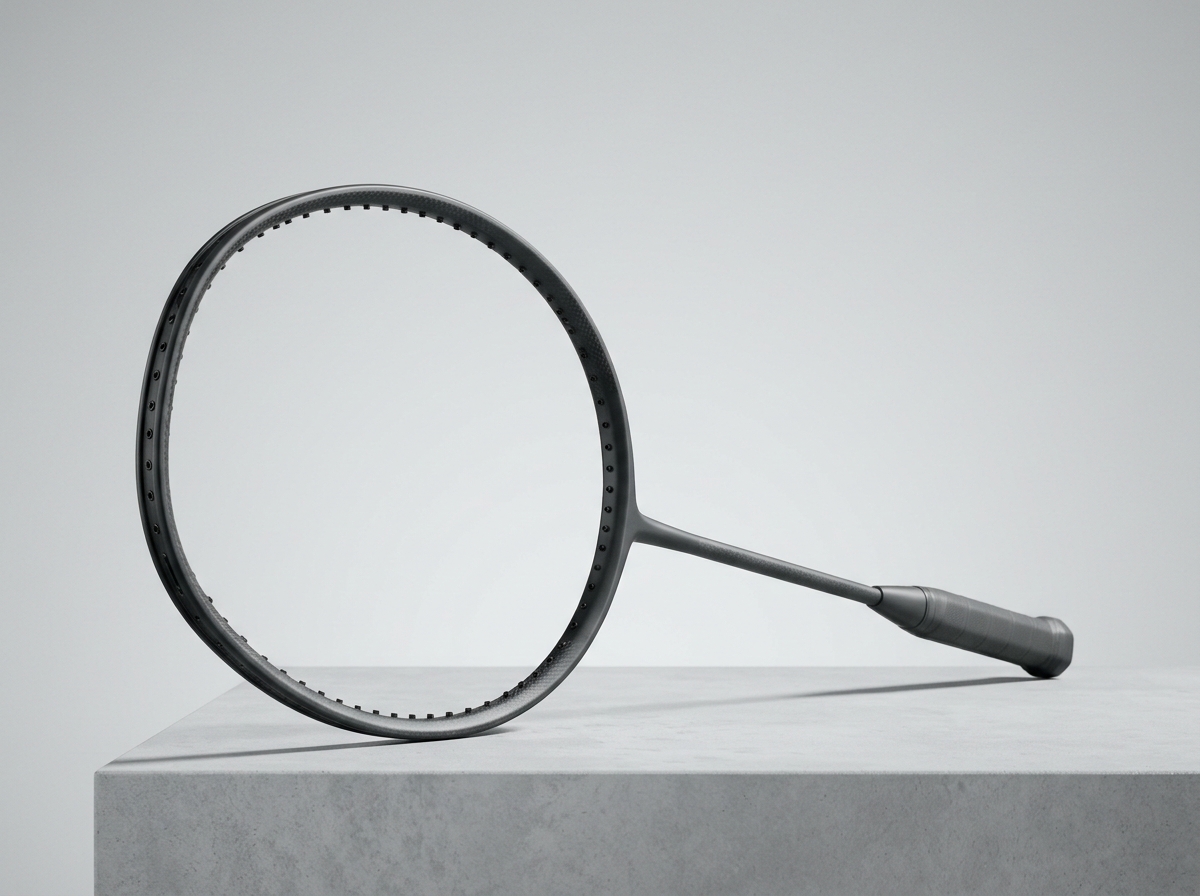
Beyond scale weight and balance numbers, physical mold geometry—specifically hoop cross-section and shaft outer diameter—determines aerodynamic drag, torsional stability, and how a private-label badminton lineup feels on court.
01 / Hoop Geometry: Box, Aero-Sword & Hybrid Profiles
When reviewing open molds in our racket catalog, hoop cross-section is the first structural decision to align with target players:
| Frame Profile | Structural Shape | On-Court Handling | Typical OEM Positioning |
|---|---|---|---|
| Box Frame | Flat-sided rectangular cross-section | High torsional resistance, solid impact feel | Control & rear-court power SKUs |
| Aero / Sword | Beveled diamond or airfoil edge | Lower air drag, faster flat drives & defense | Doubles speed & lightweight 5U SKUs |
| Aero-Box Hybrid | Box stability at 3/9 o'clock, aero top arc | Balanced head speed and sweet-spot stability | All-round flagship commercial models |
02 / Shaft Outer Diameter & Kick-Point Tuning
Carbon shafts are rolled over precision steel mandrels. Outer diameter (commonly ranging from slim ~6.6–6.8 mm profiles to standard ~7.0 mm+ tubes after paint) interacts directly with wall thickness and resin ratio:
- Standard Diameter (~7.0 mm class): Offers predictable anti-torque stability and consistent durability for club rental, school, and mainstream retail channels.
- Slim Shaft (~6.6 – 6.8 mm class): Reduces air resistance during fast wrist snap, requiring carefully controlled prepreg layup so bending strength is preserved.
03 / Why Experienced Buyers Test Raw Carbon Blanks First
Primer, paint, water decals, and clear coats add mass and shift balance forward. Before approving full custom artwork and decals, testing unpainted or matte-black raw blanks lets your team verify pure structural feel, T-joint torsional rigidity, and stringing behavior without cosmetic delays.
04 / Aligning Mold Selection with Written Spec Sheets
Always record whether weight, balance point, and shaft flex are measured on bare unstrung frames, primed frames with wooden handles, or finished strung rackets. Contact our OEM team with your target channel and estimated order quantity to request matching open-mold blank samples.
Related engineering guides
Open-Mold Blank Sampling vs. Private Steel Tooling: Carbon Racket OEM & Batch QC Workflow
Decide when to launch with factory open molds versus private steel tooling, and structure sample sign-off and batch QC checkpoints.
Tennis Racket Static Weight, Swingweight & Grip Sizes (G1–G4): OEM Assortment Guide
Plan commercial unstrung weight tiers (270g / 285g / 300g), swingweight targets, and regional G1–G4 grip size splits for OEM tennis orders.
72 vs. 76 Grommet Holes, Unstrung vs. Pre-Strung Delivery & Stencil Ink OEM Guide
Evaluate 72- vs. 76-hole grommet layouts, compare unstrung frame shipping against pre-strung retail kits, and plan custom stencil branding.
Plan your racket range
Share your target market, racket types and sourcing needs. We can review models, configurations and customization options together.